
Sydney Tree Removal Rules & Council Guidelines
Understanding Council Approval, Exemptions and Tree Removal Requirements Across Sydney and NSW
Tree removal is regulated across NSW, and approval or a confirmed exemption is generally required before a tree can be removed, but exactly what's required depends entirely on your local council.
- AQF Level 5, QTRA and TRAQ qualified Consulting Arborists
- Council-specific advice
- Exemption assessments
- Fast-track service available
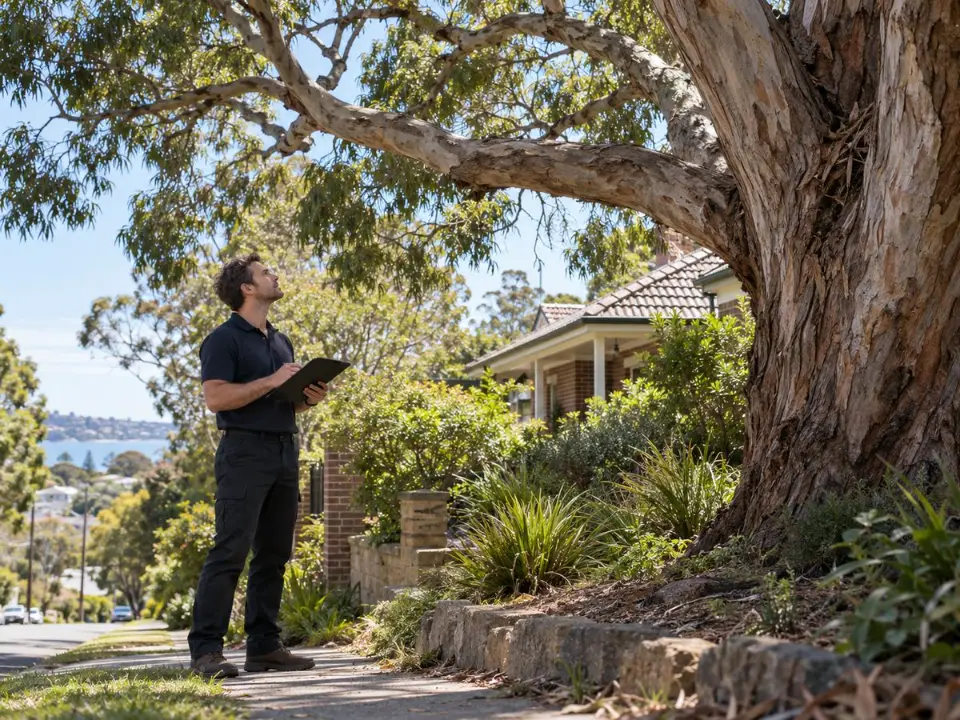
Do You Need Council Approval to Remove a Tree?
Tree removal controls vary between NSW councils and may be contained in Development Control Plans, tree management policies, tree preservation provisions or other local planning controls. The rules that apply to your property depend entirely on your local government area, and they genuinely differ between neighbouring councils, sometimes significantly. It's never safe to assume that because a neighbour removed a tree, or a tree was removed in a nearby suburb, the same applies to you.
If you're unsure whether your tree needs approval, the safest first step is checking your specific council's requirements, or getting an independent assessment before you act.
How Tree Protection Works in NSW
Tree protection in NSW isn't governed by a single, uniform rule. Instead, it's administered through a combination of the layers listed.
Because these layers can overlap, the requirements for a single tree on a single property can sometimes involve more than one set of rules.
- Local councils, who set and enforce tree preservation controls for their area
- Different size thresholds for which trees are protected
- Different protected or exempt species between councils
- Heritage controls, where a property or area has heritage listing
- Bushfire legislation, which can affect vegetation management near buildings
- Biodiversity legislation, particularly for larger sites or rural land
- State agencies, where a proposal intersects with matters beyond council's authority
When May Council Approval Be Required?
Council approval is commonly required for the works listed.
If your situation falls into one of these categories, it's worth checking your council's requirements before any work begins.
- Removing a healthy tree
- Tree removal connected to a development
- Significant pruning of a protected tree
- Works affecting trees on heritage properties
- Vegetation clearing beyond a single tree
- Works affecting trees on public or council-managed land
Common Tree Removal Exemptions
Many councils provide exemptions from formal approval in certain circumstances, which commonly include the situations listed.
These categories are common across many councils, but every council defines its exemptions differently. The exact species, size thresholds and conditions vary, and what's exempt in one council area may not be exempt in the next. Always confirm the specific exemption criteria that apply to your property before assuming a tree doesn't need approval.
- Dead trees
- Dangerous or hazardous trees
- Specific exempt species
- Trees below a certain size
- Works required for bushfire protection
- Genuine emergency works
What If the Tree Is Dangerous?
A dangerous tree is not automatically exempt from council approval.
Some councils provide exemptions, urgent pathways or specific provisions for trees presenting an immediate hazard, but the criteria and evidence requirements vary between council areas. Before relying on a dangerous-tree exemption, confirm the requirements applying in your council area and retain appropriate evidence of the tree's condition.
If the concern involves sudden failure, storm damage or immediate structural instability, arrange a Tree Risk Assessment as a priority inspection.
Dead Trees
Many councils provide an exemption for genuinely dead trees, but the tree generally needs to meet the council's definition of dead, and some councils still require notification or evidence before removal.
Tree Pruning Rules
Minor, routine pruning is often permitted without approval, but significant pruning of a protected tree can require the same approval as removal in many council areas. Whether particular pruning falls under an exemption or requires approval depends on the extent of the work and the specific council's rules.
Tree Removal for Development
Tree removal connected to a development is generally treated differently to a standalone removal request.
A standalone tree removal permit typically applies where you want to remove a tree independent of any construction project. Where removal is connected to a broader development, such as a new home, extension or subdivision, it's usually assessed as part of your Development Application rather than through a separate standalone permit, and typically requires supporting arboricultural documentation.
Heritage Trees
Trees on heritage-listed properties, or within a heritage conservation area, often carry additional layers of approval beyond standard tree preservation controls.
If your property sits within a heritage conservation area, or contains a heritage-listed tree, it's worth checking both your council's standard tree controls and any heritage-specific requirements before proceeding.
- Heritage conservation area controls
- Trees that are themselves heritage-listed items
- Additional approvals required alongside standard tree permits
Native Vegetation and Biodiversity
For larger sites, rural properties, or projects involving more than an individual tree, native vegetation and biodiversity legislation can apply alongside, or instead of, standard council tree controls. This is particularly relevant for rural subdivisions, larger vegetation clearing projects, and sites with significant native vegetation or habitat value.
Replacement Planting
Where tree removal is approved, councils may require replacement planting as a condition of consent. Replacement ratios, minimum pot sizes, species requirements and planting locations vary between council areas and may also depend on the significance of the tree being removed.
The specific requirements depend entirely on your council, so it's worth confirming this as part of your approval rather than assuming a standard ratio applies.
What Should You Do Before Removing a Tree?
Before removing or significantly pruning a tree, identify the council area, check whether the tree is protected, determine whether an exemption applies and confirm whether formal approval is required.
If council requires arboricultural evidence to support removal, a Tree Removal Report can document the tree's condition and the arboricultural basis for the application.
Find Your Local Council's Tree Removal Rules
Every NSW council has its own tree preservation controls, permit requirements, exemptions and replacement planting rules. Select your council below to view detailed guidance prepared by Arbor Express.
Greater Western Sydney
Northern Sydney
Inner West and Eastern Sydney
Southern Sydney
Blue Mountains and Central Coast
Hunter Region
South Coast
Southern Highlands
Frequently Asked Questions
In most council areas, yes. Even on private property, tree removal is generally regulated unless a specific exemption applies. Requirements vary by council, so check your local government area's rules before proceeding.
Whether a tree is protected depends on your council's specific controls, which may relate to species, size, location or heritage status. Check your council's tree preservation rules or seek an independent assessment to confirm.
Many councils maintain a list of exempt species that can be removed without approval, but exempt species vary between councils. A species exempt in one area may be protected in another.
Many councils provide an exemption for genuinely dead trees, but the tree generally needs to meet the council's definition of dead, and some councils still require notification or evidence. Confirm your council's specific exemption criteria.
Many councils provide a faster pathway or exemption for genuinely dangerous trees, but this usually still depends on the tree meeting the council's criteria for a hazardous tree, not simply an owner's opinion. An independent Tree Risk Assessment, arranged as a priority inspection, can provide the evidence needed either way.
Minor, routine pruning is often permitted without approval, but significant pruning of a protected tree can require the same approval as removal in many council areas. Check your council's specific rules on pruning versus removal.
Yes, typically. Tree removal connected to a development is usually assessed as part of your Development Application rather than a standalone removal permit, and generally requires supporting arboricultural documentation.
What Our Clients Say
Need Help Understanding Your Council's Rules?
Not sure whether your tree needs approval, qualifies for an exemption, or which report you need? Our AQF Level 5, QTRA and TRAQ qualified Consulting Arborists give clear, independent advice for your property and council.