
Arborist Reports Sydney
Which Arborist Report Does Your Development Need?
If you're planning a Development Application, building near existing trees or responding to council requirements, you may be asked to provide a tree report or arborist report. The report required depends on your project stage and what needs to be assessed.
- AQF Level 5 Consulting Arborists
- QTRA and TRAQ qualified
- 32+ years' consulting experience
- Development and DA tree reports
- Reports prepared with reference to relevant council requirements
- Fast-track assessments available
Need a Tree Report for Your Sydney Development?
Arbor Express prepares AQF Level 5 Arborist Reports for developments throughout Sydney, helping homeowners, architects, builders, developers, planners and strata managers identify the correct arboricultural documentation before work begins.
Depending on your project, you may need a Tree Survey Report, Preliminary Arboricultural Assessment, DA Tree Impact Assessment (Arboricultural Impact Assessment), Tree Protection Plan, Tree Root Investigation or ongoing Project Arborist services during construction.
The important first step is identifying which report you actually need.
Send us your plans, council correspondence or Development Consent and we'll review your project and recommend the appropriate starting point.
Which Tree or Arborist Report Do You Need?
Different stages of development require different arboricultural information. Some projects need only one report, while larger developments may require several reports as they move from site investigation and concept design through Development Application and construction.
Still unsure? Send us your plans or council request and we'll identify the appropriate report.
Tree Survey Report
A Tree Survey Report records the existing trees on or around a development site and their relevant arboricultural attributes.
It can provide the baseline tree information needed by architects, designers and other consultants before further arboricultural assessment is undertaken.
A Tree Survey may also form part of the information used for a Preliminary Arboricultural Assessment or DA Tree Impact Assessment.
Preliminary Arboricultural Assessment
A Preliminary Arboricultural Assessment is an early-stage development report used to identify tree constraints before the proposed design is finalised.
It helps the project team understand which trees may warrant retention, where Tree Protection Zones and Structural Root Zones may influence the design, and where potential tree-development conflicts should be considered early.
This is generally the better starting point when you are still designing the project.
DA Tree Impact Assessment
Once development plans have been prepared, a DA Tree Impact Assessment, formally an Arboricultural Impact Assessment (AIA), assesses how the proposed design may affect existing trees.
The assessment considers issues such as building footprints, excavation, retaining walls, driveways, underground services, level changes and potential TPZ/SRZ encroachment.
It then provides recommendations regarding tree retention, removal, mitigation and protection to support the Development Application.
Tree Protection Plan
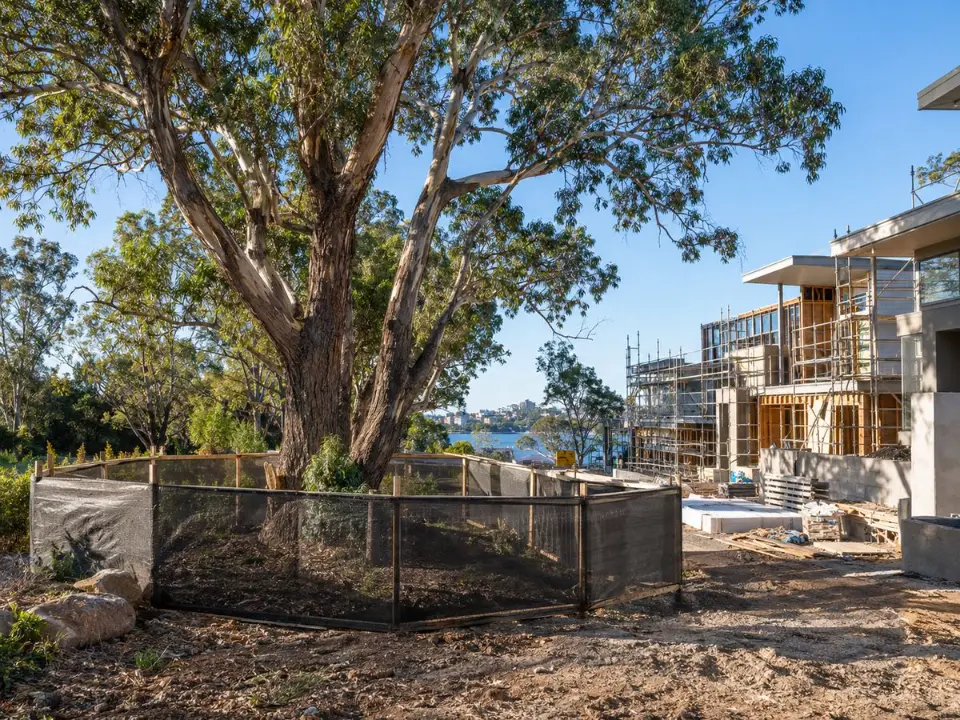
A Tree Protection Plan sets out the measures required to protect retained trees during demolition and construction.
Depending on the project and Development Consent, this may address tree protection fencing, exclusion zones, ground protection, excavation controls, access restrictions and arboricultural inspection requirements.
Tree Root Investigation and Mapping
Where excavation is proposed close to a retained tree and the location of significant roots is uncertain, a Tree Root Investigation can provide additional information before design or construction decisions are made.
Arbor Express provides non-destructive root investigation using AirSpade excavation where appropriate, together with root mapping and arboricultural interpretation.
Project Arborist Services
Where Development Consent requires arboricultural inspections or supervision during construction, an AQF Level 5 Consulting Arborist can act as the Project Arborist.
Project Arborist services may include tree protection inspections, construction hold-point inspections, excavation supervision, root assessment, compliance reporting and final arboricultural certification where required.
Construction Tree Compliance
Development Consent may contain arboricultural conditions that continue throughout demolition and construction.
Construction Tree Compliance focuses on implementing and documenting those requirements, from tree protection before works commence through required inspections, supervision and completion documentation.
Tree Risk Assessment
Not every tree report relates directly to the development design.
Where a tree is declining, structurally compromised or potentially hazardous, a Tree Risk Assessment examines its condition, structural integrity and associated risk.
Where relevant to a development, the findings can provide independent arboricultural evidence about the condition and suitability of the tree for retention.
Flora and Fauna Assessment
Some developments require ecological assessment in addition to arboricultural reporting, particularly where native vegetation, habitat or threatened species may be affected.
Our ecology services can complement the arboricultural assessment where both tree and ecological issues need to be considered.
Where Does Your Tree Report Fit in the Development Process?
A typical development may move through several arboricultural stages.
Not every development requires every stage. The correct pathway depends on the site, proposed works, existing trees, council requirements and Development Consent conditions.
- 1Existing trees need documenting: Tree Survey Report
- 2Design constraints need identifying: Preliminary Arboricultural Assessment
- 3Proposed plans need assessing: DA Tree Impact Assessment (AIA)
- 4Retained trees need construction protection measures: Tree Protection Plan
- 5Development Consent requires construction supervision: Project Arborist
- 6Tree conditions must be monitored and documented during construction: Construction Tree Compliance
What Information Should You Send Us?
If you're unsure which tree report you need, send us whatever information you already have. Useful documents can include the items listed.
You don't need to diagnose the report yourself. We'll review the available information and tell you which arboricultural service is the appropriate starting point.
- Architectural or concept plans
- Survey plans
- Development Application documents
- Council correspondence or requests for information
- Development Consent and conditions
- Approved Arboricultural Impact Assessment
- Existing Tree Protection Plan
- Relevant photographs
Why Choose Arbor Express for Your Tree Report?
Arbor Express provides development arboricultural services from early site assessment through Development Application and construction. Our team works with homeowners, architects, developers, builders, planners, engineers, Principal Certifiers and other project consultants throughout Sydney. The advantage is continuity: where required, Arbor Express can assess the trees early, review the proposed development and continue providing arboricultural services during construction.
- AQF Level 5 Consulting Arborists
- QTRA and TRAQ qualified
- 32+ years' arboricultural experience
- Tree Surveys and preliminary assessments
- DA Tree Impact Assessments
- Tree Protection Plans
- In-house AirSpade root investigations
- Project Arborist services
- Construction compliance inspections
- Ecology capability where required
- Fast-track reporting available
Time-Sensitive Project?
Fast-track assessments are available, subject to inspection availability and the complexity of the required report. Call us to discuss your timeframe.
0494 077 630Frequently Asked Questions
A tree report is a general term used for arboricultural documentation prepared to assess or record trees. For a development, the specific report required may be a Tree Survey, Preliminary Arboricultural Assessment, DA Tree Impact Assessment, Tree Protection Plan or another arboricultural report depending on the project stage and council requirements.
The terms are often used broadly to describe the same type of arboricultural documentation. What matters for a Development Application is identifying the specific assessment or report required for the project.
It depends on your project stage and the trees potentially affected. If plans are still being developed, a Preliminary Arboricultural Assessment may be appropriate. Once proposed plans are available, a DA Tree Impact Assessment may be required to assess their impact on existing trees.
Qualification requirements vary between councils and individual projects. Where an AQF Level 5 Consulting Arborist is required, Arbor Express can prepare the relevant assessment and documentation.
Yes. Send us the council correspondence together with any available plans and we can identify the arboricultural information being requested.
Yes. A project can require different arboricultural documents as it progresses through planning, Development Application, consent and construction.
Yes. We regularly coordinate with architects, designers, planners, engineers, builders and other project consultants.
Yes. Fast-track assessments are available for time-sensitive projects, subject to inspection availability and the complexity of the required report.
Tree and Arborist Reports Across Sydney and NSW
Arbor Express prepares AQF Level 5 tree and arborist reports throughout Greater Sydney and surrounding NSW regions.
Council requirements vary between locations, and our council location guides explain local tree controls and Development Application requirements for individual areas.
What Our Clients Say
Not Sure Which Tree Report You Need?
Send us your plans, council correspondence or Development Consent. Our AQF Level 5 Consulting Arborists will review your project, identify the appropriate report or service and provide a quotation.