
Tree Removal in Cessnock: Permit and Arborist Report Guide
Do I need a permit to remove a tree in Cessnock?
Removing a tree in Cessnock City Council's LGA requires Council approval in most circumstances. We provide local AQF Level 5 arborist reports for tree removal applications throughout Cessnock, Kurri Kurri, Pokolbin, Lovedale, Branxton and the wider Hunter Valley.
- Tree removal reports
- Dangerous tree reports
- Heritage tree applications
- Fast-track reporting available
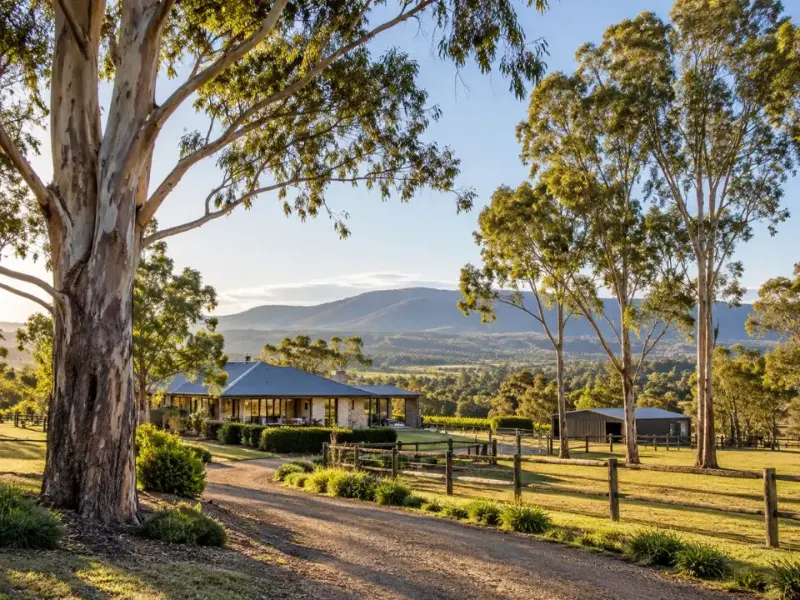
Independent Arborist Reports for Tree Removal
With 32+ years of experience and fast-track reporting available, we help property owners obtain Council approvals efficiently and avoid costly mistakes.
Under Cessnock City Council's Development Control Plan, a permit is required to remove or prune vegetation on non-rural land that is higher than 3 metres and has a branch spread of 3 metres or more. This applies across urban residential, commercial and mixed-use zones throughout the Cessnock LGA.
When a Development Application Is Required
A Development Application (DA), not a standard tree permit, is required in the following cases. The assessment is more detailed and the justification standard is higher.
A DA Is Required For
- Trees listed on Council's Significant Tree Register
- Heritage items listed under Schedule 5 of the Cessnock LEP 2011
- Trees on the site of a heritage item listed under Schedule 5 of the LEP
- Vegetation in E2, E3 or E4 environmental zones below the Biodiversity Offsets Scheme threshold
Heritage Trees
Trees on or adjacent to heritage-listed properties in Cessnock, Kurri Kurri, Branxton and Wollombi need a DA, not a standard permit. Council must consider both tree management outcomes and heritage impacts.
We have experience preparing reports for heritage tree applications in Cessnock and understand what Council's heritage assessment team looks for.
Quick Reference: Do I Need Approval?
If you're unsure which applies, contact us or Council before proceeding.
You Will Generally Need Approval If
- The tree is over 3 metres high
- The tree has a branch spread greater than 3 metres
- The tree is on a heritage-listed property
- The tree is on Council's Significant Tree Register
You May Not Need Approval If
- The tree is within 3 metres of a lawful structure
- The property falls within an RFS 10/50 clearing entitlement area
- The tree presents an immediate threat to life or property
- Removal is authorised under an existing development consent
Exemptions: When Can You Remove a Tree Without a Permit?
Some removals do not require Council approval. Incorrectly assuming an exemption applies is one of the most common reasons owners receive fines, so check with us or Council if unsure.
Proximity to Structures
Vegetation within 3 metres of the outermost projection of a lawful building or structure may be removed without a permit.
Biosecurity Matters
Trees declared a weed under the Biosecurity Act 2015 do not require a permit.
10/50 Vegetation Clearing Rule
Where a property is in an RFS clearing entitlement area, trees within 10 metres of a home may be removed without Council consent. Check eligibility on the RFS website.
Ornamental Pruning
Pruning in accordance with AS 4373 Pruning of Amenity Trees does not require consent.
Existing Development Consent
Where removal is authorised under a current approved development consent, no separate permit is required.
Imminent Threat to Life or Property
No permit is required where there is an immediate threat, but Council may require evidence. Contact Council as soon as practicable after emergency action.
Dead trees: Council advises that trees appearing dead or dying should not be removed without first seeking advice. A permit request for a dead, dying or dangerous tree needs verification from a Level 5 qualified arborist, which we can prepare.
Rural Land and Lifestyle Properties
For land zoned RU2 Rural Landscape and RU4 Primary Production Small Lots, the Biodiversity Conservation Act 2016 applies and Local Land Services Hunter is the consent authority, not Council. Contact Local Land Services Hunter on 1300 795 299 before removing native vegetation on rural-zoned land. RU5 Village properties follow the standard urban rules.
Rural-Residential Enquiries Often Involve
Many enquiries come from properties throughout Pokolbin, Lovedale, Rothbury, North Rothbury, Bellbird Heights and Branxton:
- Large mature eucalypts
- Existing remnant native vegetation
- Trees affected by past land clearing practices
- Bushfire management requirements
- Conflicts with sheds, driveways, pools and new dwellings
Common Reasons for Removal
- Significant structural defects or advanced decay
- Root damage affecting buildings, pools or services
- Storm damage or failed branches
- Conflicts with approved development or building works
- Powerline conflicts
- Decline in large or remnant trees on lifestyle properties
Many of these applications need a dangerous tree report prepared by an AQF Level 5 arborist.
Tree Removal Report or Development Arborist Report?
A Tree Removal Report is appropriate where the purpose of the application is removing a tree because of its condition, safety, structural defects, decline or management needs.
If removal forms part of a dwelling, extension, subdivision, commercial development or other DA, a Development Arborist Report or Arboricultural Impact Assessment may also be required.
What's in an Arbor Express Arborist Report?
Our AQF Level 5 reports for Cessnock permit applications include the following. Development-related removals may also need Arboricultural Impact Assessments, Tree Management Plans and project arborist services.
Assessment
- Tree identification, species, height and trunk diameter
- Visual Tree Assessment (VTA) per the Mattheck and Breloer methodology
- Structural defect identification and failure mechanism analysis
- QTRA (Quantified Tree Risk Assessment) where identifiable targets exist
- SULE (Safe Useful Life Expectancy) rating
Recommendations and Documentation
- Clear recommendation for removal, retention or management
- Council-specific justification for the permit or DA pathway
- Heritage and Significant Tree Register notation where applicable
- Full photographic record
- Arborist qualifications, registration and company details
Penalties for Unlawful Tree Removal in Cessnock
Council has enforcement powers where protected vegetation is removed without approval. Always confirm your approval status before proceeding.
Penalties Can Include
- On-the-spot fines
- Penalty Infringement Notices (PINs)
- Prosecution and court-imposed fines
- Replanting equivalent vegetation at the owner's cost
- Preparing and implementing a remediation plan
Common Enquiries in Cessnock
Many Hunter Valley properties contain large eucalypts that established long before surrounding development. As buildings, accessways and outdoor areas are added, conflicts develop between existing trees and modern land use.
We regularly assess trees affected by structural defects, storm damage, decline, root conflicts and development pressures, with independent advice to support permit applications.
Tree Removal Services Across the Cessnock Region
Cessnock LGA
Arborist reports for tree removal permit applications across Cessnock City Council's LGA and surrounding communities.
- Aberdare
- Abermain
- Allandale
- Bellbird
- Branxton
- Cessnock
- Cessnock West
- Ellalong
- Greta
- Heddon Greta
- Kearsley
- Kurri Kurri
- Lovedale
- Millfield
- Mount View
- Neath
- Nulkaba
- Paxton
- Pokolbin
- Rothbury
- Sawyers Gully
- Stanford Merthyr
- Weston
- Wollombi
Council Approval Process
Standard permit assessments typically take 2 to 4 weeks from lodgement. DAs involving heritage trees or Significant Tree Register listings take longer.
- 1Contact Council: call Customer Relations on 02 4993 4100 and request a Tree Preservation Assessment.
- 2Council assessment: Council determines which approvals or actions are required.
- 3Written notification: Council confirms the required pathway in writing.
- 4Engage Arbor Express: if a Level 5 report is required, or you want to strengthen your application.
- 5Report preparation: we inspect the site and deliver a report ready for Council.
- 6Lodge with Council: submit the arborist report for consideration.
Our Services in Cessnock
Nearby Areas We Service
Cessnock Tree Removal FAQs
Yes, in most cases. A permit is required for vegetation on non-rural land higher than 3 metres with a branch spread of 3 metres or more. Trees on Council's Significant Tree Register, heritage items or in certain environmental zones need a Development Application instead.
Possibly. Vegetation within 3 metres of the outermost projection of a lawful building or structure may be removed without a permit. We can confirm whether your situation qualifies.
Council advises against removing a tree that appears dead or dying without first seeking advice. A permit request on safety grounds requires verification from a Level 5 qualified arborist, which we can prepare.
You may prune overhanging branches to the boundary line without a permit, provided it doesn't threaten the tree's health or structure. Removing a tree on a neighbour's land needs the owner's consent and, where protected, Council approval.
Standard assessments typically take 2 to 4 weeks from lodgement. DAs involving heritage trees or Significant Tree Register listings take longer. Fast-track inspection and report preparation may be available.
Council may specifically require a Level 5 report for dead, dying or dangerous trees, significant or heritage-listed trees, or where Council initially declined a removal request and you want reconsideration.
A standard permit covers most protected trees in urban zones. A DA is required for trees on Council's Significant Tree Register, heritage items and trees in certain environmental zones. We identify the correct pathway in every engagement.
On-the-spot fines, Penalty Infringement Notices, prosecution and court-imposed fines, replanting equivalent vegetation at the owner's cost, and preparing a remediation plan.
What Our Clients Say
Book Your Tree Removal Report in Cessnock
Arborist reports for tree removal permit applications across Cessnock City Council's LGA. Contact us today to arrange your report.